
If you read my last book, God Stays Near, you may recall that I had two remaining bucket list items before this chapter of flying light airplanes comes to an end. Last week I fulfilled one of those with my good friend Jim Shepard, whose story I shared in the same book when we picked up his airplane from the factory north of Seattle. We flew to Kitty Hawk, NC, where the saga of human flight began. It was a beautiful time of flying and friendship with beautiful weather and some interesting, rewarding stops along the way.
Some say, “The joy is in the journey, not the destination” which is mostly true. But in this case, the destination was incredible too—a spiritual experience that I really did not anticipate.
First I’ll describe the journey, then speak to the surprises and insights in the natural and spiritual realms that moved me. These were gleaned from the lives and times of the Wright Brothers—expressed in their friends, faith, and family.
To Kitty Hawk
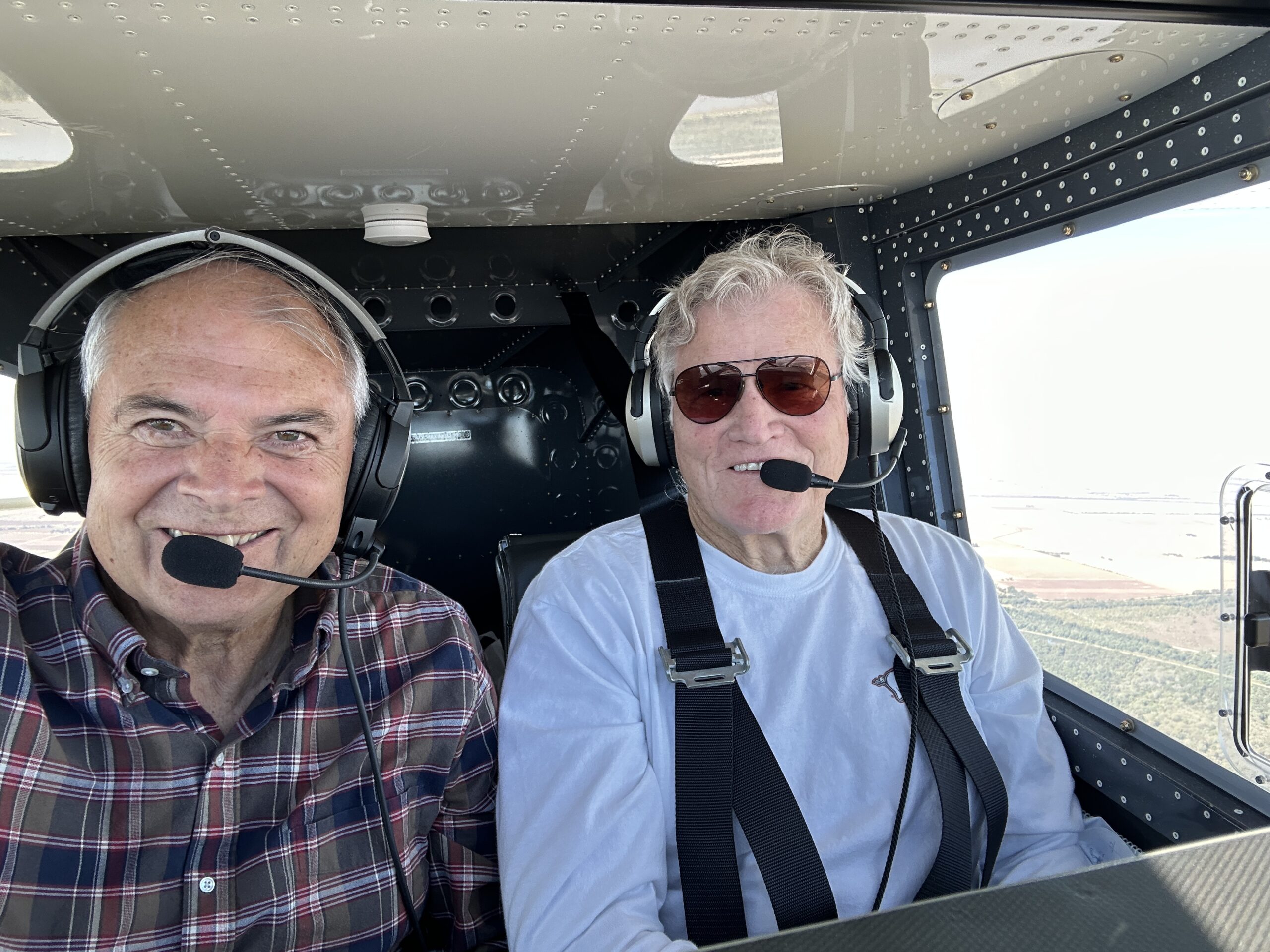
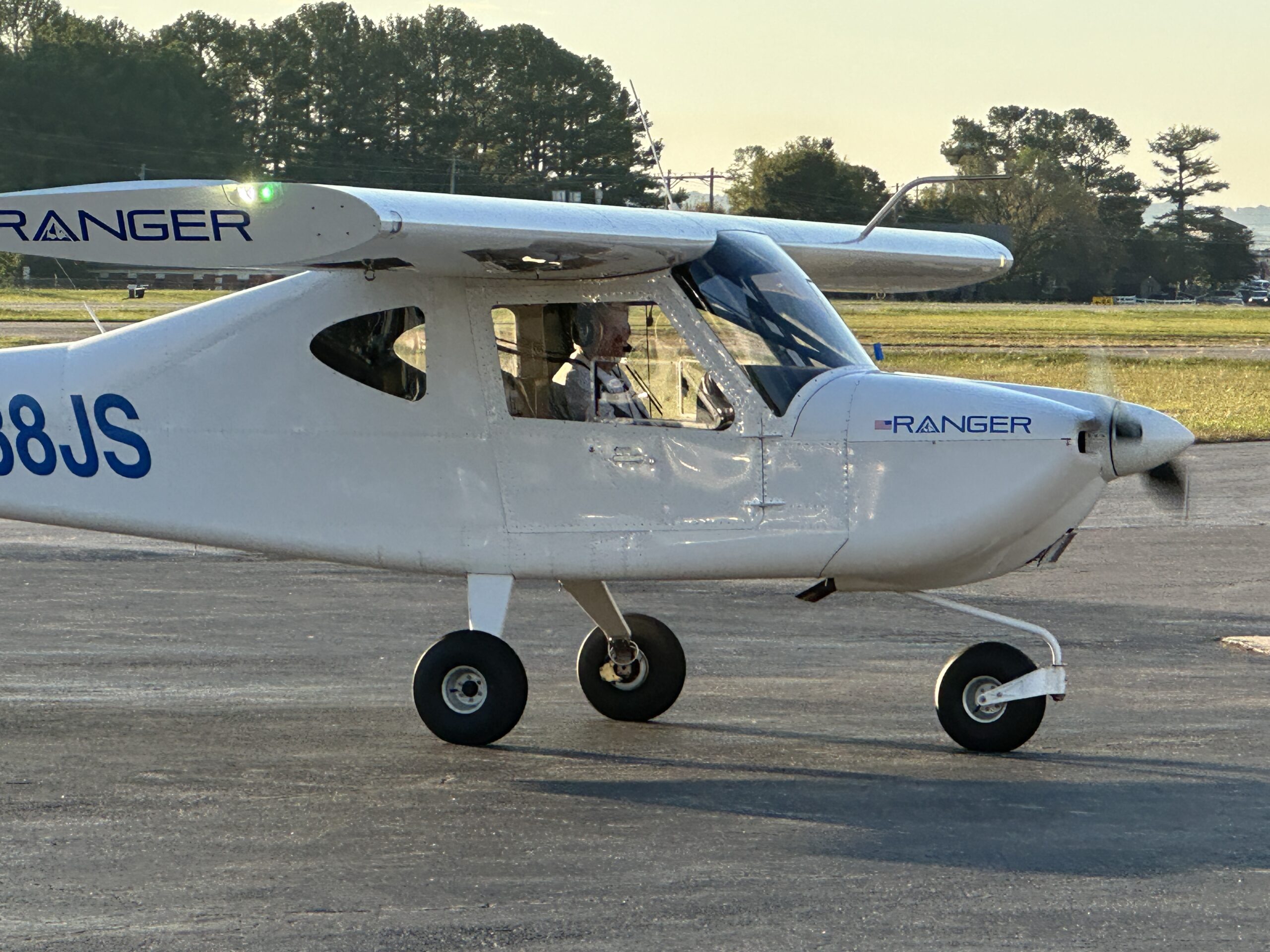
Jim and I left on October 21 in his two place Vashon Ranger R7. We chose it because it burns half as much fuel as my Cessna 182. Just like in our airline careers, we each flew every other leg, sharing the flight time and relaxing while enjoying the beautiful scenery of this impressive country, and catching up on each other’s lives. Relationship and fellowship are the most meaningful parts of the journey.
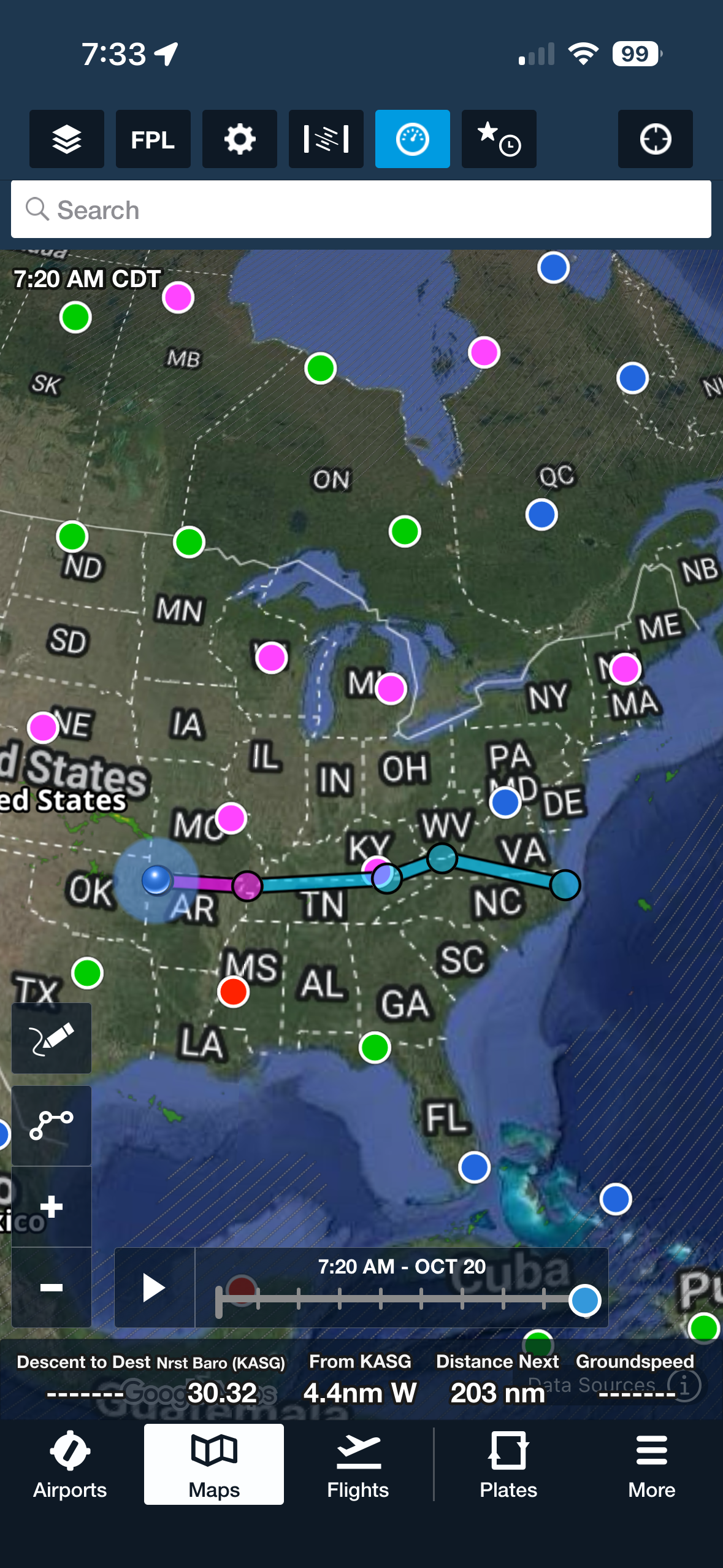
We flew a bit over 21 hours total, taking about 9 hours over two days to get there and 10 hours over two days on the return home. The rest of the time was spent exploring the Outer Banks from the ground and the air. We landed in 7 new states for his airplane, KY, WV, VA, NC, SC, AL, and TN, to refuel and stretch our legs. We had two beautiful overnight experiences. One was in the scenic Cumberland Gap area of Middlesboro, KY, and the second in Auburn, AL, staying with a friend and flyer from our 184th Fighter Squadron days. It occurred to us that we have now flown this airplane together from the Pacific Ocean to the Atlantic Ocean. Fun!
Book Worth a Look
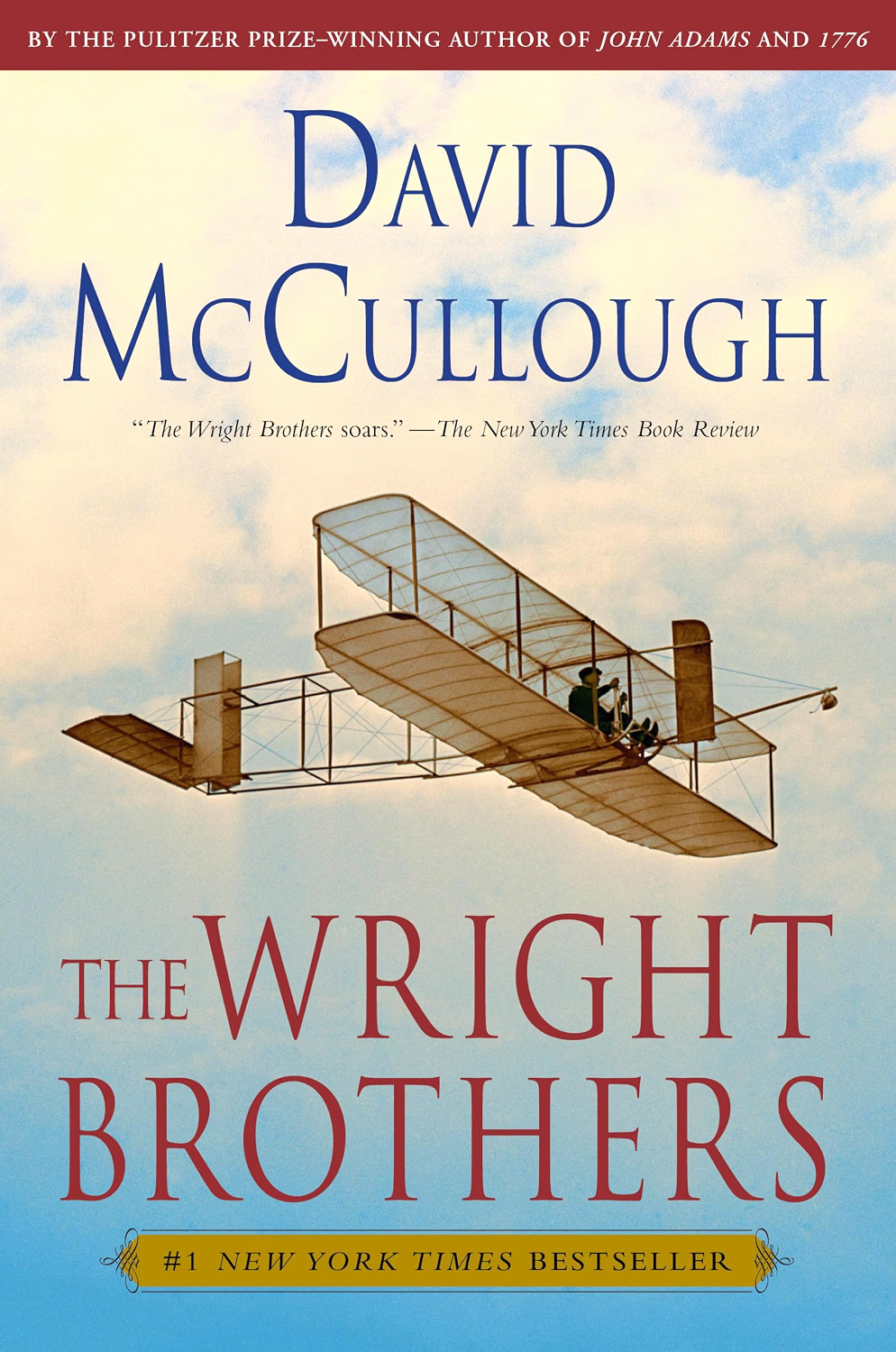
Before going, Elliott, a young man in our church told me “The Wright Brothers” by David McCullough is a must read for you as a pilot, and for any history or aviation lover.” So I bought one in the museum and couldn’t put it down once I got home. Many of the quotes below are from that book (annotated TWB). The book’s page on Amazon reads: “The #1 New York Times bestseller … the dramatic story-behind-the-story about the courageous brothers who taught the world how to fly—Wilbur and Orville Wright.”
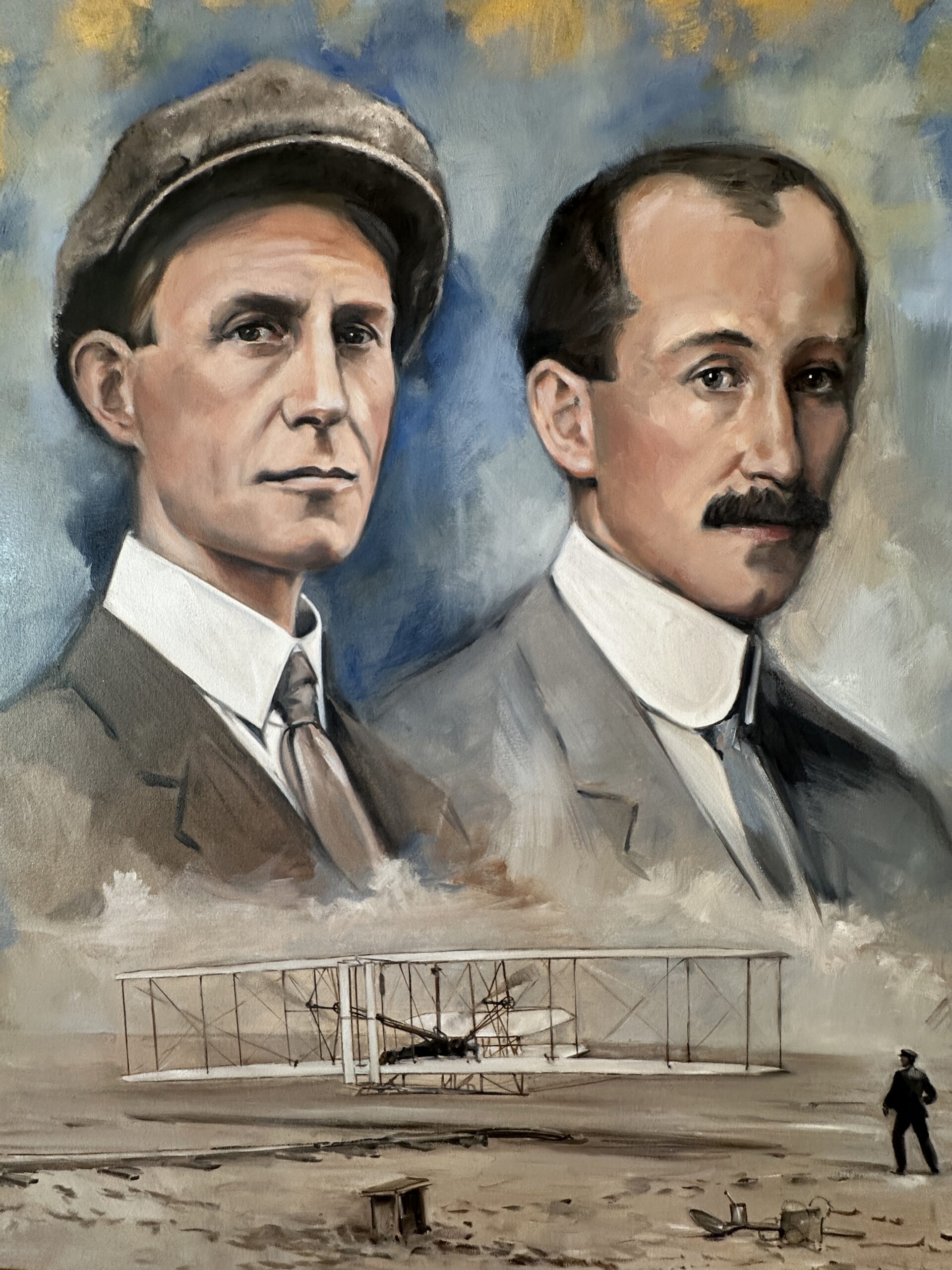
The Wright Brothers were inspired to take up Otto Lilienthal’s quest to get on “intimate terms with the wind.” “Rejecting the principle of inherit stability, conventional wisdom, they wanted control to depend on the pilot.” (USPS Brochure)
Wilbur would say, “No bird soars in a calm.” “And clearly, if ever they were to succeed with what they had set their minds to, they must learn—and learn from experience—the ways of the wind.” “For the Wrights the winds were never the enemy.”(TWB)
A White Sheet
There is much to learn about the brothers, their family, their times, and the spirit of their age leading up to the first flight. And there is much to learn about their continued struggles and successes after that first historic flight.
That first flight was December 17, 1903, the brothers put a large white sheet up over their makeshift hangar near Kill Devil Hill, just south of Kitty Hawk. This was a signal to their friends at the life-saving station a few miles away that they needed their help and were ready to give it a go. The temperature was near freezing with ice on pools of water all around and the wind was blowing 21 mph out of the north. The camera was placed in position and one of the bystanders instructed to squeeze the bulb at the moment of lift off. Orville was flying, and Wilbur was steadying the right wing as the plane slid down the rail under its own power before climbing into the air at 10:35 AM. The photo taken was to become one of the most dramatic and historic of the century.
The Wrights had just proved to themselves and the world—at least to five witnesses with one photograph—that they could fly a powered heavier than air machine. It took awhile for people everywhere to believe it, and no one could foresee how much this would change the world. Only sixty-six years later, a man would step onto the moon!
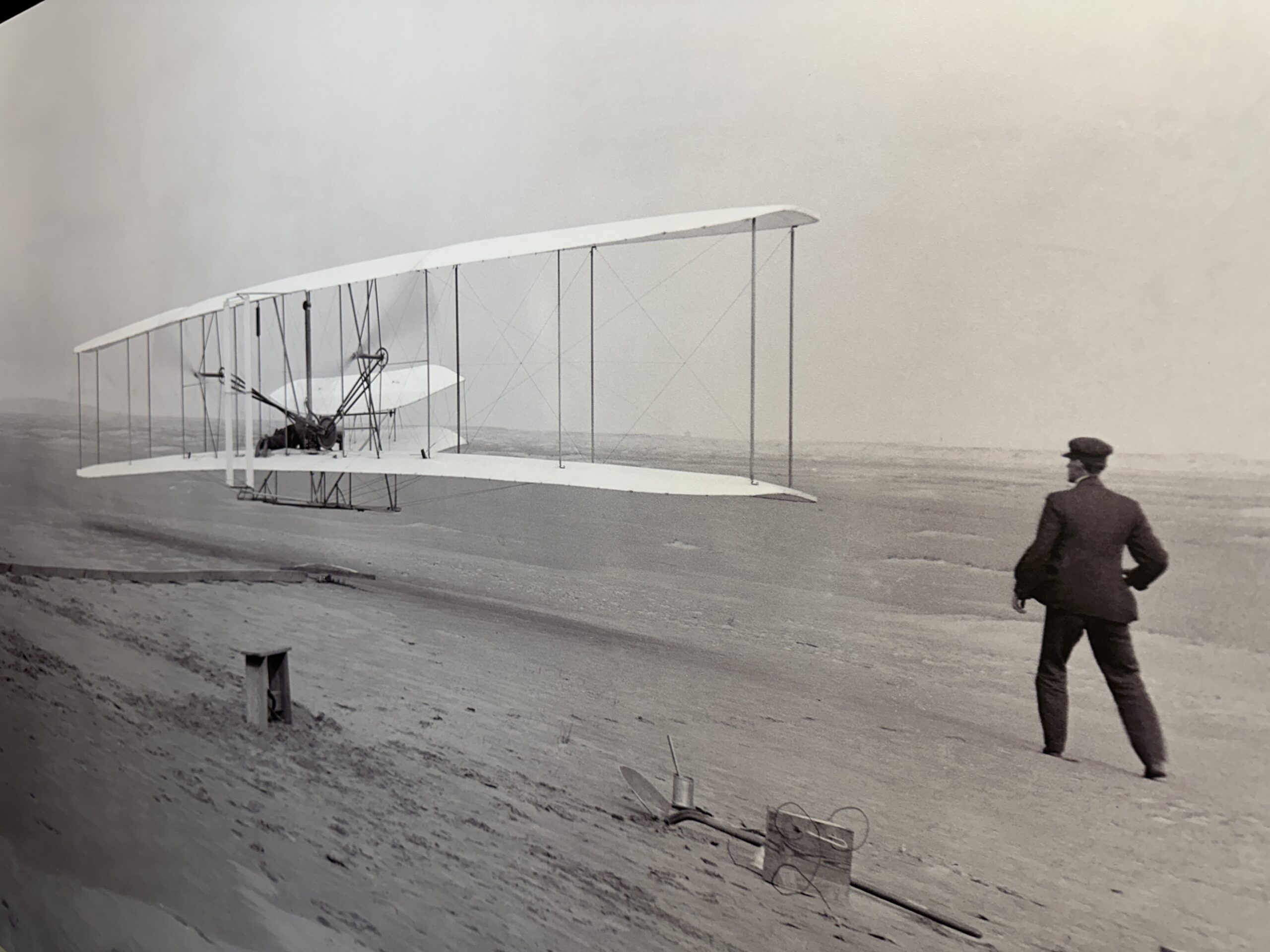
Orville’s first flight covered 40 yards and took 12 seconds. Wilbur’s next flight covered almost 60 yards in the same 12 seconds. Orville in the third flight covered just short of 70 yards in 15 seconds. Wilbur on the fourth and last flight that day covered almost three football fields (284 yards) in 59 seconds, all with successful landings. The world had just become a different place.
A Humbling Gust
There was talk about flying again, or maybe even attempting to fly up the beach to the weather station. While they were deliberating, a big gust of wind took their flyer, and their 200 pound friend, John T. Daniels, who was holding the flyer, 800 pounds altogether, into the air and started tumbling them over and over toward the ocean. They finally stopped the flyer and extracted their friend from a tangle of fabric and wire, but the flyer would need extensive repair, and in fact would never fly again. Instead it was shipped to Dayton and put into storage.
The wind can humble anyone. Daniels could proudly claim to have survived the first ever airplane accident. The boys fixed lunch, washed dishes, and then walked four miles up the beach to the Kitty Hawk telegraph office [today’s Black Pelican Restaurant where we enjoyed dinner October 23] to message their dad, “We did it!”
The telegram read:
Kitty Hawk N C Dec 17
Bishop M. Wright 7 Hawthorne St
Success four flights Thursday morning all against twenty one mile
wind started from level with engine power alone average speed
through air thirty one miles longest 57 seconds inform Press
home xxx Christmas Orville Wright
“Two hours on the cold, windy Outer Banks of North Carolina saw one of the turning points of history.” TWB

The same John T. Daniels would comment later, “They put their whole heart and soul and all their energy into an idea and they had the faith.” He would add, “They were two of the hardest working boys he ever knew.”(TWB) They knew they had accomplished an amazing feat and felt like they were the first in the world to do it. They also knew better than anyone else how much work it had been, and how much work remained to be done.
New Men—Holy Wrights
C.S. Lewis in “Mere Christianity” ends with chapters describing the Christian faith as superior to other world religions in that it changes people from the inside. He calls these people, “New Men.” I could go on and on about the Wright’s tenacity, courage, ingenuity, and piloting skills learned while flying the thing! And about the engineering involved—their warped wing control system, inventing a suitable light weight aluminum motor, and a wind tunnel to discover the needed pitch for propellers which was more of a challenge than the motor.
Want to really impress people? Build the world’s first airplane and learn to fly it while flying!
What to impress people even more? Live a life of adventure, courage, and holiness as you’re learning, being carried along by the Spirit in life.
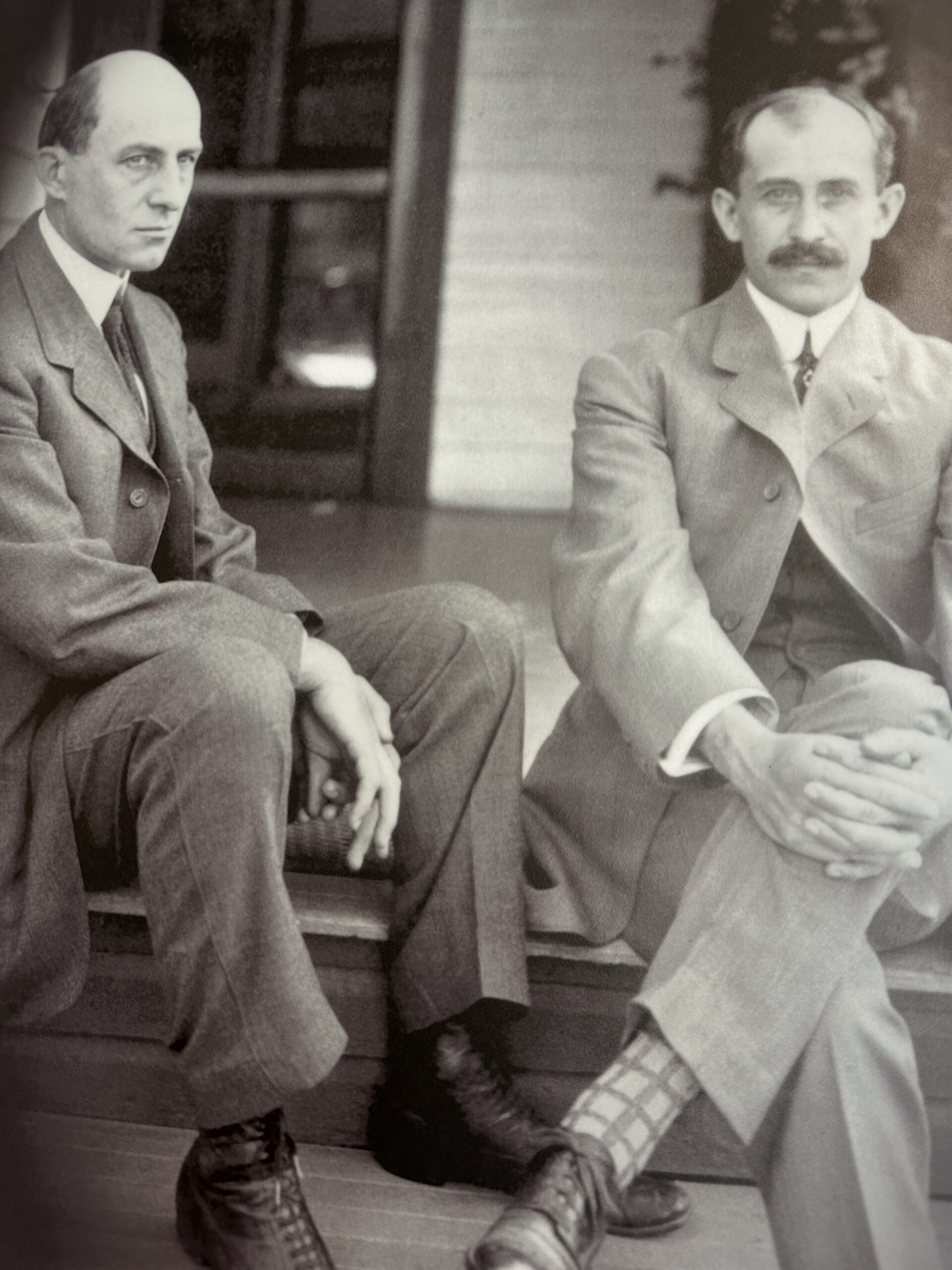
That’s what Wilbur and Orville Wright, the sons of devout pastor, Milton Wright, did—they did both actually—but the latter was greater in the eyes of the French public, the few residents of Kitty Hawk, Kings and Presidents, other inventors, and my eyes too, as a pilot and believer after reading this splendid biography and visiting Kitty Hawk. I believe in God’s eyes too. He’s mostly concerned with character. “Man looks on the outward appearance, but the LORD looks upon the heart” (1 Samuel 16:7).
I struggle with whether to give you evidence or simply suggest you read their biography. You’ll find many small, understated details of their very human stories that continue to inspire and warm the heart. Jesus said, “By their fruits you shall know them” (Matthew 7:15-20). The Wright Brother’s fruits of loyalty, honesty, kindness, humility, faith, hope, love, devotion to family and friends, and the fact that they were unchanged by fame and money say it best. After success, Wilbur quoted his father, Milton, “A person only needs enough money not to be a burden to others.”
Epic
What lives they lived! And what amazing times! Rooted and grounded in the Bible, along side their world changing achievements, Wilbur and Orville exhibited something even harder—good character and humility. Their love, loyalty and devotion to their sister, father, and friends is heartwarming! I teared up several times, as I saw the character their father and God birthed and grew within them on display, especially loyalty and humility. They had only a few close friends, but they valued them much. The Brothers were confident knowing who they were and Whose they were. They were unchanged by powerful men, money, or success. Do yourself a favor. Read this inspirational, insightful book. :):)
Shalom as you follow your dreams. Godspeed on your journey!